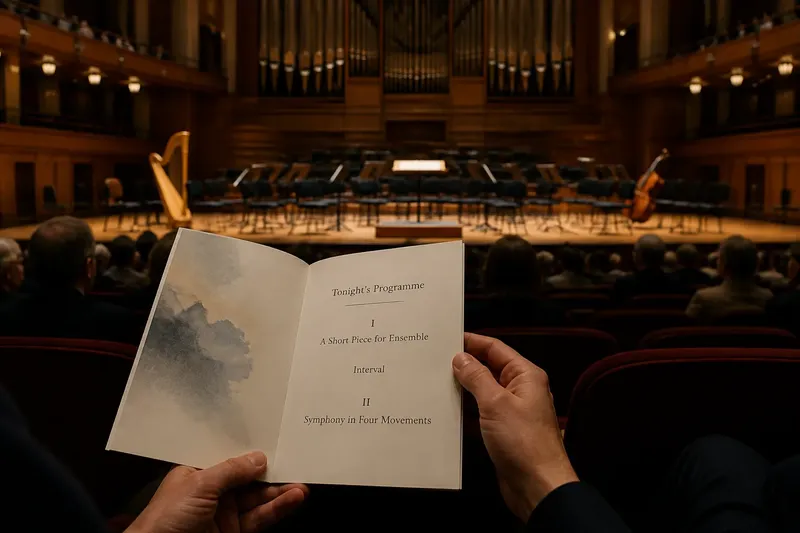
A Midweek Concert with Room to Unwind
Plan a midweek concert with one clear priority, a calm arrival and practical choices that leave you free to enjoy the performance without a rushed dash.
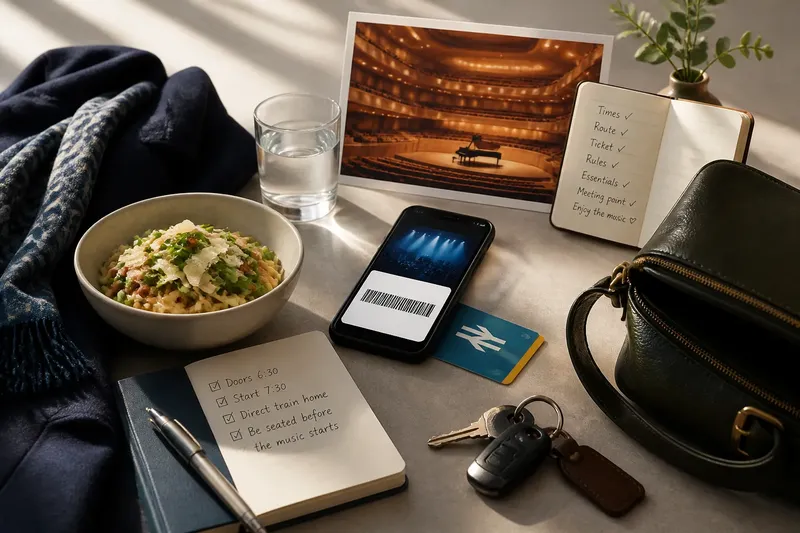
You close your laptop, check the train app and see that a midweek concert is still possible—but only if dinner, travel and the doors all line up. A simple plan can keep the performance from becoming the last item in a crowded evening.
What matters most on a midweek concert night?
Choose one part of the evening to protect: hearing the opening, arriving with time to find your seat, or getting home without a complicated late journey. Make the priority specific enough to guide a decision. “Be seated before the music starts” is more useful than “have a good time”.
Say you finish work at an office across town, the hall is beside the central station, and the advertised start is after your usual commute. You want to be seated before the opening and need to catch a direct train home afterwards. You save the ticket to your phone, check the venue’s door time and the operator’s return service, then choose food near work rather than adding a restaurant stop by the hall. The resulting plan keeps the concert and the return train in view; if the workday runs late, the meal is the first thing to drop.
How should you plan the time between work and the hall?
Work backwards from the performance, using the venue’s current door and start times. Include the hand-offs that take real time: shutting down work, changing clothes if needed, travelling, locating the correct entrance, passing any checks and finding your seat.
Build the route around its awkward points rather than an ideal journey. A change between trains, a long walk from the station or a queue at the entrance may matter more than the distance on a map. Keep one alternative route in mind, but decide in advance what would prompt you to use it, such as a service disruption shown by the operator.
Think of the evening like packing a lunchbox: if every space is filled with an extra plan, there is nowhere for a delay to go. Leave the time after the performance open where possible, especially if you have an early start the next day.
Is it better to eat before or after a midweek concert?
Eating before the performance is often easier when the finish is late or the journey home is fixed. Choose a familiar meal at home, near work or on the route, and check opening hours if you are relying on a café or restaurant.
Eating near the venue can work if the timings are comfortable. Check how long it takes to walk from the table to the entrance, and avoid a booking that leaves no room for slow service or a crowded pavement. If the gap is short, a snack may be enough; follow the venue’s rules on food and drink.
Afterwards, keep food as an option rather than an obligation. If the performance ends late or you feel tired, going straight home can be the complete plan.
What should you check before leaving work?
Make one focused check of details that could change your choices. For each item, note what you will do if the information is different from what you expected:
- Check the performance start and door times; if the doors open later than your planned arrival, adjust the departure time, and if the start time has changed, revise the whole route.
- Check the venue address and entrance; if your ticket names a different entrance, head there instead of relying on the main doors.
- Open the ticket on your phone before leaving; if it will not load, save the permitted offline version or contact the ticket provider for help.
- Check the outward route and return service with the transport operator; if a disruption affects your main route, use the alternative you have checked or reconsider the plan.
- Read the current bag, cloakroom and food rules; if your bag is not allowed, leave it at home or arrange an approved alternative.
- Gather your travel card, phone, keys and any medication you need; if an essential item is missing, retrieve it before setting off rather than assuming you can manage without it.
- Confirm a meeting point and fallback with friends; if someone is delayed, go to the agreed entrance or continue separately rather than searching the venue by message.
Use the venue’s and transport operator’s latest information, since policies and services can change. Once the relevant decisions are made, stop checking unless new information appears.
How can you make the journey feel manageable?
Choose a route you can follow without constant app-checking. Put the ticket, travel card, keys and phone in their usual places before the workday ends, and allow time to change if you are not going straight from work to the hall.
If you are meeting friends, agree on a place that is easy to identify, such as the venue’s named entrance, and decide what happens if one person is late. This avoids turning the walk to the auditorium into a series of searches and messages.
What if friends want to add dinner or drinks?
Say which part you can join and which part needs to stay optional. You might share an early meal but skip drinks afterwards because of the return journey. A clear limit gives friends something practical to plan around without asking everyone to follow the same schedule.
If someone else is organising, name your constraint early: you need to be near the hall before the doors open, or you have to leave promptly after the performance. Then the group can choose a plan that does not depend on you making a last-minute dash.
How can you keep the performance at the centre?
Once inside, find your seat, put away anything you do not need and take a moment to settle. If you are unfamiliar with the hall, use the time to locate the auditorium and facilities; if you know the venue, there is no need to add another activity simply to fill the wait.
Keep the plan for after the concert simple enough that you can follow it when you are ready to leave. A known route and an open evening are often easier to manage than a chain of timed stops.
What if the evening starts running late?
Drop the least important extra first. If work overruns, skip the restaurant stop and choose a simpler food option; if a service is disrupted, check the transport operator’s updates and switch to the route you already considered.
If you may miss the start, check the venue’s late-admission policy rather than assuming you can enter at any point. Contact the venue if its policy is unclear, then decide whether arriving late still fits your priority or whether heading home is the better choice.
What can you learn from one midweek concert?
After the visit, note a single useful detail while it is fresh: perhaps the entrance was on a different side of the building, or the walk from the station took longer than you had allowed. Keep that note for a future visit to the same hall, rather than turning one evening into a rule for every venue.
For a midweek concert, the most useful plan is the one that keeps its important parts visible: the performance, the route there and the way home. Leave side plans easy to remove, and you can make a sensible choice if the working day does not go quite as expected.