Why Concert Programmes Put Works in a Particular Order
Why concert programmes put works in a particular order: learn how contrast, pacing and transitions shape a more connected listening experience.
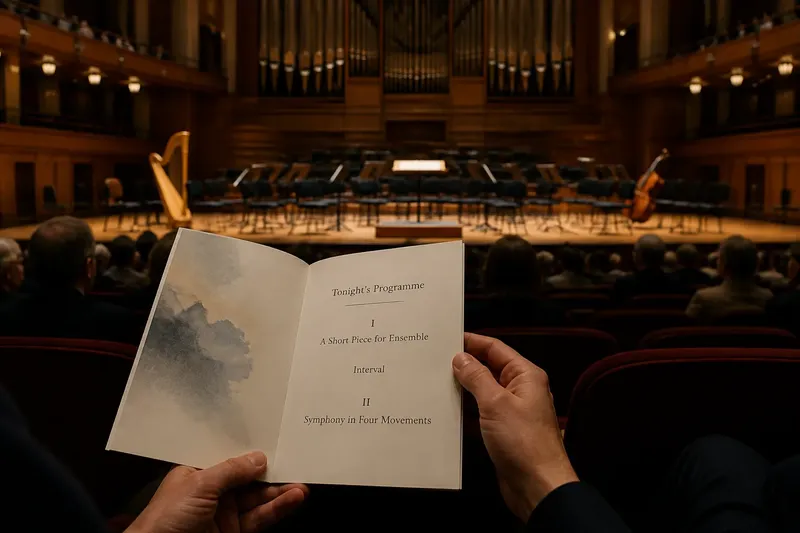
You open a concert programme as the orchestra tunes and see a quiet, spare piece listed before a large symphony. The order may shape how you hear both works: why concert programmes put works in a particular order often comes down to contrast, pacing and the way one sound prepares the ear for another.
What can the first piece do?
An opening work gives the room somewhere to begin. A brief overture or compact contemporary piece can settle attention before the audience takes on a longer musical argument.
An opener can also set a question. A brisk, bright work might establish energy that the next piece complicates; a hushed beginning can draw attention to texture before a larger orchestra fills the space. The first selection need not be a miniature version of the main event. It may be a deliberate change of scale.
Notice what the opening asks you to hear: a solo line, a repeating rhythm, a particular instrumental colour or a sudden shift in volume. If a later work treats that feature differently, the connection may become audible without explanation from the stage.
How does contrast keep a programme moving?
Concert planners can place works side by side to sharpen their differences. A small chamber piece followed by a broad orchestral one changes not only loudness but also the feeling of space. After a tightly controlled work, expansive melodies may seem to breathe; after a turbulent one, quiet music can feel newly exposed.
Contrast can involve the number of performers, a singer or soloist, musical period, mood or sound density. Changing every feature at once may make the works feel like separate islands. A thread—perhaps a related instrument, rhythm or subject—can help the changes register as a conversation rather than a shuffle.
Think of changing the lighting in a room: the furniture stays put, but different details catch your eye. In a concert, a change of orchestration can reveal a musical line that seemed hidden a moment earlier. The sequence gives that change its force.
Why might the longest work come later?
A substantial work often follows a shorter opener because it can command a longer stretch of attention once the audience has settled. It may also provide a destination for the evening: a broad structure, a climactic finish or a final movement that gathers earlier ideas into one sweep.
That pattern is not compulsory. A concert might begin with its central work and offer shorter pieces afterwards, or place substantial works on either side of an interval. These choices alter the sense of proportion. If the most demanding music comes first, later pieces can feel like a release; if it comes last, earlier music may seem like preparation.
Look beyond the printed duration, if one is given. A work with many compact movements may feel segmented, while a continuous span can ask for sustained concentration. Movement order matters too: an energetic close before the interval can send the audience out buzzing, while a reflective ending may leave a different sort of pause.
What changes when there is an interval?
An interval divides the evening into two listening stretches, and programmers can use that break as a hinge. The first half might introduce a style or sound world; the second can answer it, overturn it or move elsewhere. The link may be musical, but it can also be a matter of scale and mood.
For a listener, the break is a chance to reset attention. You might glance back at the programme and note one sound that stayed with you. When the next piece begins, listen for whether that impression returns, changes character or disappears.
There is no need to decode a hidden plot. Some programmes are designed around a clear relationship; others bring together works that make compelling neighbours for less literal reasons. If a transition feels abrupt, that may be intentional, or it may simply mark a change of direction.
How can you follow the shape as you listen?
Rather than treating the programme as a set of separate entries, listen for transitions. Ask what has changed between works and what has stayed: the pulse, instrumental colour, emotional temperature or amount of space between musical events. Those observations can give the concert a shape without specialist vocabulary.
- Before the first work: Check whether it is short or large-scale, intimate or forceful. If it feels compact, listen for a detail that might return; if it feels expansive, notice how it establishes the evening’s scale.
- At each change of work: Check for changes in performers, sound, pace or mood. If several features shift, treat the contrast as the point; if one feature carries over, listen for how the new work transforms it.
- Before the interval: Check whether the final work in the first half seems to close a thought or leave it open. If it feels conclusive, expect a reset; if it leaves an edge unresolved, listen for a possible continuation after the break.
- After the interval: Compare the new opening with the first work. If it restores the earlier atmosphere, hear the break as a return; if it sounds different, let it reset your expectations.
- At the end: Recall one detail from the opening. If it now seems changed by what followed, consider how the sequence altered its meaning; if it does not, take the contrast itself as part of the evening’s shape.
- When reading the notes: Check for a named instrument, shared subject or link between works. If a note points to something you have heard, use it to focus your listening; if it does not match your impression, keep your own reading.
Say you attend a concert whose programme lists a short piece for a small ensemble first, followed after the interval by a symphony. You notice the opening piece’s sharply repeated rhythm; during the symphony, a broader orchestral passage uses a similar kind of motion. The result is a possible connection between the works, not proof of a planned musical reference, and you can still hear their difference in scale.
Which programme details are worth checking?
A printed programme offers clues, though it cannot map every intended effect. Check the order of works, the performers listed for each, the interval placement and any notes about movements or instrumentation. A soloist appearing in only one section, for instance, signals a change in musical focus before the first note.
Notice whether several short works are grouped together or each has a separate place. A cluster can encourage you to hear the pieces as a set, while a single work between larger ones may act as a pivot. Read the notes selectively: a comment on a shared instrument or musical idea can help, but you do not need to memorise it.
The order may reflect practical needs as well as artistic ones: performer changes, instrument arrangements or the time needed to clear and reset the stage. Those logistics do not cancel the musical effect. A stage reset can create a useful pause between sound worlds, even when its purpose is practical.
What questions help you read a concert programme?
Does the first piece predict the rest of the concert?
Not necessarily. An opener may establish a sound or mood, but it can also create a striking contrast with what follows.
Why are two works with different styles placed together?
The change may invite comparison, offer variety or make one work’s character clearer after the other. Listen for a small shared feature before deciding that the pairing has no connection.
Does the interval always divide the programme in half?
No. It marks a break in the audience’s experience, but the music on either side need not be equal in length or weight. Consider whether the break separates two sections or sits within a longer musical arc.
Should you read the notes before the music begins?
A quick look can orient you, especially if the programme identifies an unusual instrument or a relationship between works. It is equally reasonable to read afterwards, when you can compare the notes with your own impressions.
How can the order change what you hear?
On your next visit, treat the sequence as something to listen for, not a puzzle with one correct answer. Notice how the first work directs your attention, how contrasts alter the room’s feel and whether the ending changes your memory of what came before.
Why concert programmes put works in a particular order is useful to consider because it turns the printed list into a listening prompt. One note about a shift in scale or mood may be enough; the music supplies the rest.