Before Printed Concert Programmes, How Did Listeners Know What Was Playing?
Learn how listeners followed concerts before printed programmes, and why announcements, local knowledge and performance cues offered different kinds of context.
At a concert, a performer steps forward and names the next piece; someone in the audience recognises it, while a neighbour listens for the first time. Before printed concert programmes were readily available, listeners could receive information in much the same piecemeal way: through notices, introductions and what they already knew. The exact mix depended on the place, event and period, so there was no single experience shared by every audience.
What could a concert notice tell you?
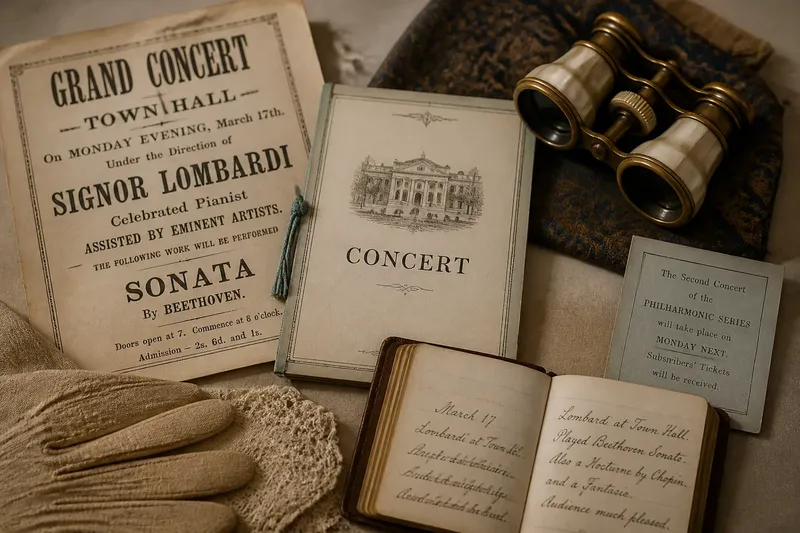
A newspaper advertisement, handbill or notice displayed at a venue could announce an event and its principal performer. It might also name a featured work or explain the occasion, but a short notice was not necessarily a complete running order. Without a specific concert record, it is safer to treat these as possible forms of publicity than as a universal pattern.
A performer’s name could help a prospective listener decide whether to attend, while words such as “benefit” or a reference to a civic occasion might signal the event’s purpose. Yet those clues could not tell someone exactly what each piece would sound like. Publicity gave a glimpse of the evening, not necessarily a full account.
How did news travel beyond the notice?
Local conversation could add context. A music teacher, friend or venue worker might pass on a performer’s reputation or explain that a concert belonged to a familiar series. Such knowledge depended on personal connections and varied from listener to listener; a newcomer without those contacts might know much less.
Prior musical experience offered another route. Someone who had learnt a piece at home or heard it at an earlier performance might recognise it from its title or opening phrases. Another listener could arrive without that background and meet the music afresh. Familiarity was useful, but it was not a condition of attending.
Imagine a listener who sees a handbill naming a visiting pianist and one sonata, but no full sequence. She asks her piano teacher about the composer, then hears from a neighbour that the recital is part of a local series. She goes expecting solo piano music, but still does not know the complete order; the trade-off is useful context without certainty about every item.
What cues were available in the room?
A performer or organiser could announce a title or offer a short introduction. This might identify the next work, explain its connection to the occasion or suggest something to listen for. Such remarks were possible ways of guiding an audience, not a practice that should be assumed at every concert.
The sounds and actions of the performance provided further cues. A change of performers, a pause or a shift in musical character could mark a new item, even if a listener did not know its name. These cues helped someone follow the evening’s shape; they did not necessarily reveal a composer or explain the work.
Audience customs also varied. At some events, listeners might be expected to recognise familiar forms or follow the example of those around them; at others, the gathering could be more informal. A newcomer could observe when people settled, applauded or turned their attention to the stage, while remaining unsure about details that no one had announced.
What could tell you what was playing without a programme?
Did a notice list every piece?
Not necessarily. An advertisement might name a performer or featured work without setting out the entire sequence, and the information available would depend on the particular event and its publicity.
Could listeners recognise music by ear?
Some could, especially if they had encountered a piece in lessons, at home or at an earlier performance. Others could follow the performance without knowing its title or composer.
What did a spoken introduction provide?
An introduction could supply a title, background or a point of attention just before the music began. It offered direct context, though its presence and detail depended on the performers and occasion.
What did a printed programme add?
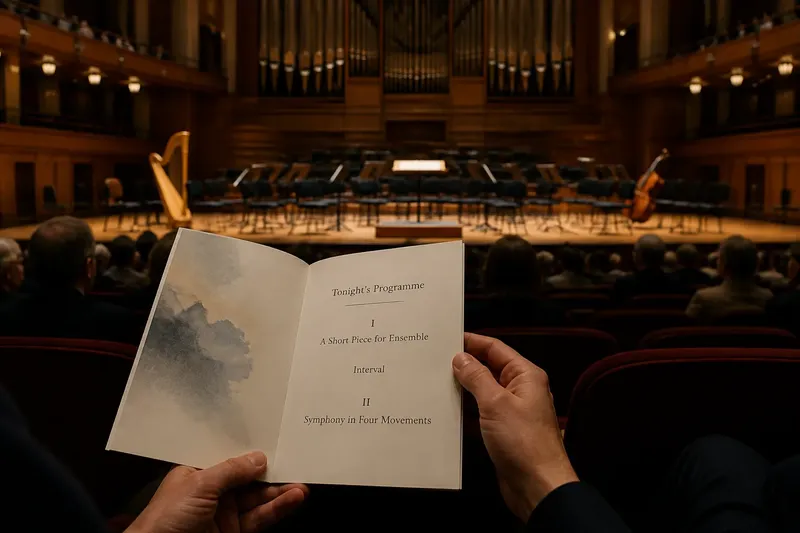
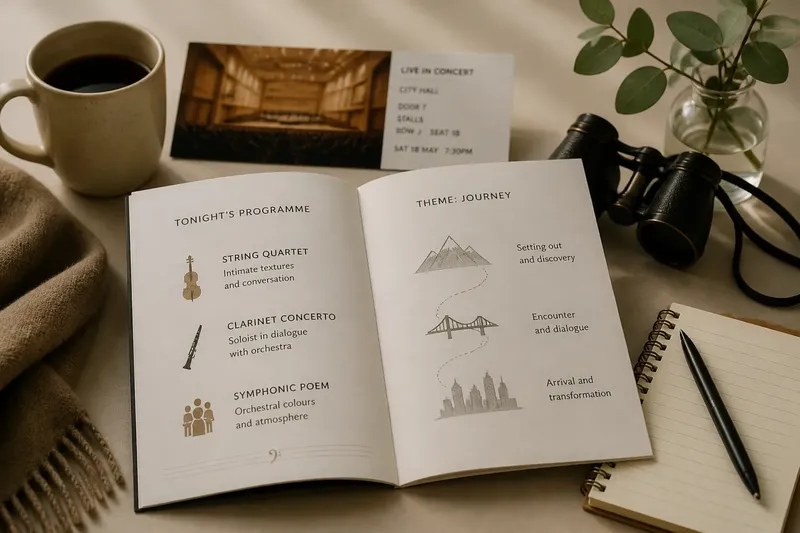
A programme could gather names and titles on a page for the audience to consult, rather than relying only on memory or a spoken announcement. What it included still depended on what the organisers chose to print.
Why was a printed programme a useful change?
A printed programme put concert details together in a form listeners could revisit during the event. Like a map beside a route, it could help someone keep track of where the evening was going without supplying the experience of the journey itself. It did not make every work familiar or replace the sound of a performer explaining what came next.
Notices, personal conversation and spoken cues remained distinct ways of sharing information. A notice could attract attention before the event; a conversation could supply local knowledge; a programme could present selected details in print; and the performance could make its own audible and visual signals. Which of these a listener encountered depended on the concert rather than on one universal custom.
When you attend a concert today, a printed programme is best read as the organisers’ account of the event, not as the only source of meaning. If a title or sequence is unclear, check the venue’s published information or listen for an introduction; the distinction between what is printed and what is spoken can tell you where to look for the detail you need.